
411 Dogwood Drive, Aberdeen, NC 28315
Mon-Sat, 9am-6pm
4.9 Rating | 732 Reviews
News & Blog
How Often Should I Change My Oil? A Guide for Aberdeen, NC Drivers
One of the questions we often hear from customers is “how often do I need to change my oil?” It’s a simple question but the answer depends on several factors including the oil type, the age of your vehicle, the local climate, and even your driving habits.
How Often Should You Change Your Oil?
While older guidelines recommended changing your oil every 3,000 miles, many modern vehicles can go longer between oil changes. Your vehicle’s owner’s manual will specify the manufacturer’s recommended oil change interval and it’s never a good idea to exceed the recommended mileage.
The type of oil is a key factor when determining oil change intervals. In general:
Synthetic blend oil: about every 3,000 miles
Full synthetic oil: about every 5,000 miles
Full synthetic diesel oil: about every 7,500 miles
Other important factors include the age of your vehicle, the weather where you live and other local conditions, and your driving habits. For example, frequent short trips, stop-and-go or city driving, dusty conditions, towing, and extended periods of inactivity all affect how often your oil should be changed. Vehicles with more than 75,000 miles also need special consideration when it comes to oil change intervals as older engines can degrade oil prematurely (more on that below).
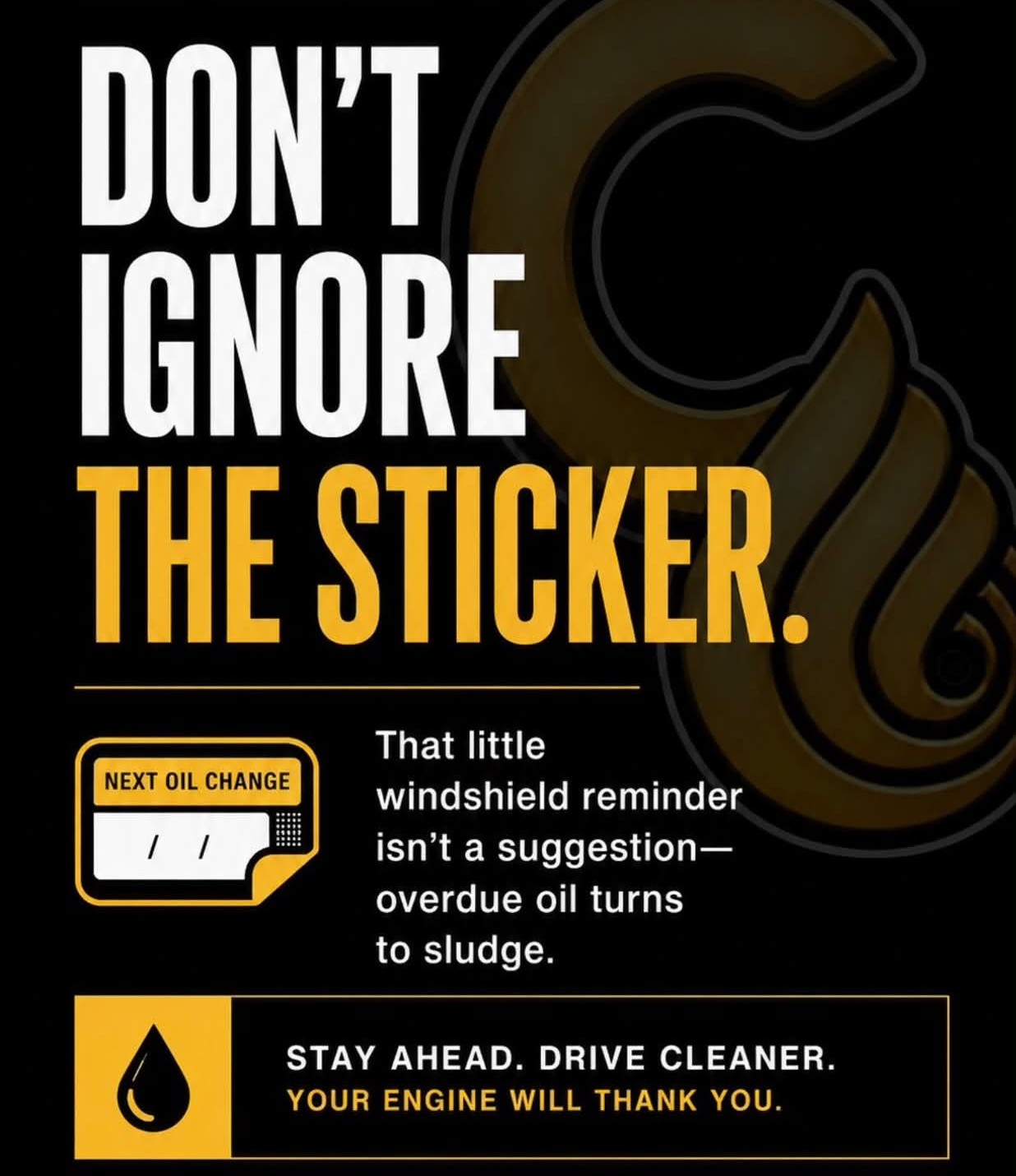
In addition to following your vehicle manufacturer's recommendation, your oil change provider may also place a sticker on your window that specifies when you should have your next oil change based on a specific mileage interval. Their recommendation is based on the manufacturer's specified interval, the type of oil used, and may also factor in their professional recommendation (see ours below). If you have a specific interval you like to target, you can ask them to update the reminder sticker to match your routine.
Are Oil Change Monitoring Systems Accurate?
Many modern vehicles have oil monitoring systems that can help you determine when an oil change may be due. However, it is a common misconception that these systems actually diagnose the condition of your engine oil at any given time. Most cars use algorithms to deduce oil breakdown based on engine revolutions, temperature, and driving time. These systems are not a direct reading of the quality of oil. They also can't detect low oil level, wrong oil type, leaks, or unusually harsh conditions. Only some higher-end/heavy-duty vehicles use true sensor-based systems that measure the oil's dielectric properties directly.
Warning Signs That May Indicate an Oil Change is Needed
Even if you are within your oil change interval, there are certain condiions that can indicate issues with your oil level or the condition of your oil. Never ignore these warning signs:
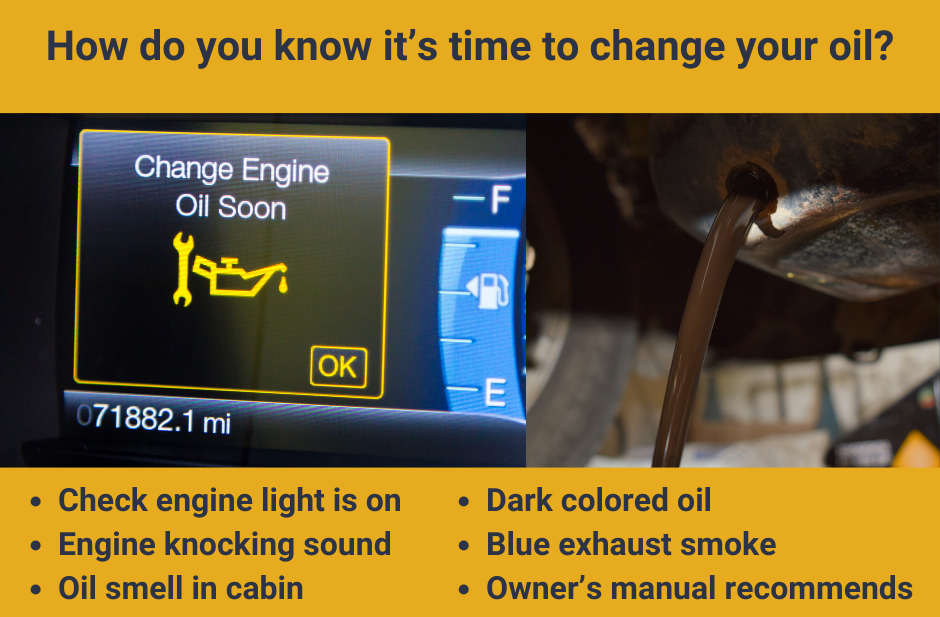
Oil change light comes on
Check engine light comes on - in vehicles that don't have a specific oil change monitor
Very dark, sludgy oil when viewed on the dipstick
Engine knocking sound
Oil smell in passenger cabin
Blue exhaust smoke
How Vehicle Age Affects Oil Change Interval
As engines age, worn piston rings and valve seals let small amounts of combustion byproducts and unburned fuel seep into the oil, which speeds up oxidation and breaks down its viscosity faster than in a newer engine. Older engines also tend to run slightly hotter and generate more internal friction and metal particulates as components wear, both of which degrade oil's protective additives sooner.
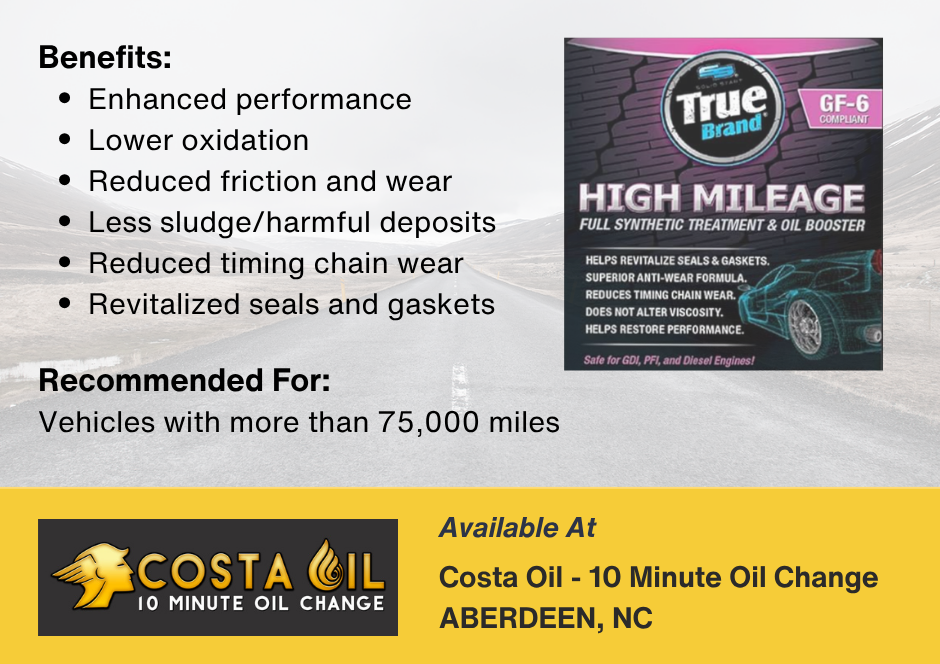
That's part of why high-mileage oils and additives exist; these specialized products include extra seal conditioners and detergents to compensate for this faster breakdown. Vehicles with 75,000+ miles often benefit from sticking closer to the shorter end of a given interval, even if their driving habits are mild.
Why Carmakers Say You Can Go 10,000 Miles
You may have noticed that a lot of manufacturers have been stretching their recommended oil change intervals over the last decade or so, with some claiming full synthetic oil can go 10,000 miles or more between changes.
Here's the part that doesn't always make it into the owner's manual: those extended intervals are partly a reflection of federal fuel economy and emissions targets (CAFE standards), not just an engineering breakthrough. Longer intervals make a car look cheaper to own and maintain on paper. That's good for a sales brochure, but it isn't necessarily what's best for your engine over the long haul.
In real-world driving conditions, oil breaks down faster than it does in a lab. Vehicles in Aberdeen, North Carolina and the Sandhills area encounter a combination of regional conditions that are tougher on oil than a lot of drivers realize.
Hot, humid summers: Central North Carolina heat accelerates oil oxidation and thins out its protective properties faster than in milder climates.
Stop-and-go traffic: Whether you're navigating US-1, Hwy 15-501, or the local roads around Aberdeen and Pinehurst during golf season and tourist traffic, frequent starts and stops are considered “severe” driving conditions.
Short trips around town: A lot of local driving in Aberdeen involves quick errands rather than long highway stretches. Short trips mean your engine often doesn't reach full operating temperature long enough to burn off moisture and condensation that build up in the oil.
Sandy, dusty roads: The Sandhills region lives up to its name. Sandy soil and dusty rural roads mean more airborne particulate that can work its way into your engine and contaminate oil more quickly.
Towing and hauling: Boats headed to the lake, trailers, campers, or just a truck bed loaded down — towing puts extra strain on your engine and oil.
Commuting to Fort Liberty and beyond: Many Aberdeen residents commute daily, adding miles quickly and often mixing highway driving with congested base-access traffic.
Even a high-quality full synthetic oil can lose viscosity and cleaning power well before it hits that 10,000-mile mark under conditions like these.
Our Recommendation: About Every 5,000 Miles
For most modern vehicles using a quality full synthetic oil, such as Chevron’s Havoline product line, we recommend an oil change about every 5,000 miles. This sweet spot is frequent enough to protect a modern engine against the real conditions we see here in Aberdeen, but not so frequently that you're changing oil that still has useful life left in it.
Regular changes at this interval go a long way toward keeping your vehicle running smoothly and reliably, getting you and your passengers where you need to go and keeping unnecessary repairs at bay.
Stop by Costa Oil in Aberdeen
“The Most Educated Customer Will Choose Us”
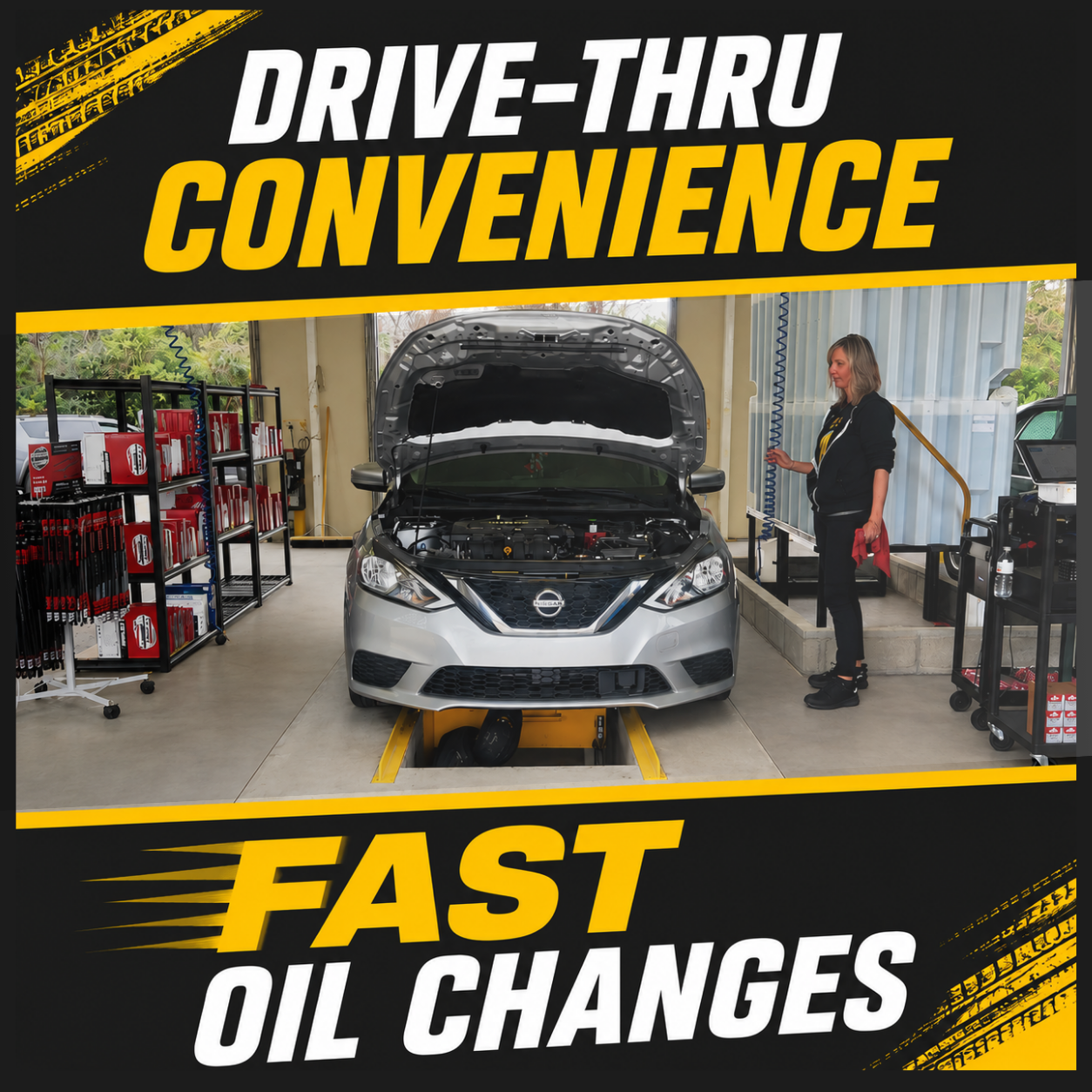
At Costa Oil – 10 Minute Oil Change in Aberdeen, we provide high quality, professional oil changes for drivers in Moore County. Every oil change includes complimentary tire pressure check and fluid top-offs, and there's no appointment necessary; just pull in and we'll take care of the rest, usually in about ten minutes.
We specialize in oil changes, so you won’t experience any high-pressure upselling. With no employee commissions and no hidden agenda, you can trust that any recommendations we make are based on the actual needs of your vehicle at the time of service.
Not sure if you’re due for an oil change yet? Bring your vehicle in and we'll give you an honest evaluation.
📍 Address: 411 Dogwood Drive, Aberdeen, NC
🕘 Hours: Monday – Saturday, 9am – 6pm – No appointment needed!


Contact
Hours of Operation



© 2026 All Rights Reserved
The Sholly Group LLC DBA Costa Oil - 10 Minute Oil Change - Aberdeen
Independently owned and operated franchise